

How We Evolved Into RuralKita: Why We Believe Every Corporate & Organisational Social Commitment Should Go Beyond Giving — to Create Impact That Is Measurable and Sustainable
Updated: 6 days ago
How 10+ years of working alongside communities shaped our evolution into RuralKita.
Every organisation’s CSR, ESG or social commitment deserves to go beyond a contribution.
Giving matters. So does capturing the good-cause moment.
But for us, social impact is not only about what was given, what was delivered, or taking pictures to show that something good happened.

The bigger story is what happens before and after that moment — whether the real need was understood, whether the right solution was implemented, what actually improved, whether the impact lasts, and whether there is evidence that an organisation can confidently communicate to its stakeholders.
We did not arrive at this philosophy overnight.
It was shaped by more than 10 years of working alongside communities, learning from the ground and gradually understanding what it really takes to turn a social commitment into impact.
Eventually, those lessons made us realise something else:
If the way we approached social impact was evolving, we needed to evolve too.
01 — The Ground Changed the Way We Think
Our journey began through Hopes Malaysia, responding directly to community needs — from water access and household farming to bridges and rural infrastructure.
In the beginning, much of our attention was naturally focused on what we could do to help.
But the longer we worked in the field, the more we understood that delivering something was only one part of creating impact.
Before a solution comes understanding.
For us, that can mean travelling hours into rural areas, walking through forests and muddy trails, tracing water sources, measuring sites, mapping locations with GPS, visiting homes and farms, and sitting down with families to understand what they experience every day.
Because a challenge that looks simple from the outside can be very different once you step onto the ground.

A village experiencing water shortages may not simply need more pipes or another tank. The real issue could involve the reliability of the source, elevation, distance, storage, distribution, household demand or how the existing system performs during a prolonged dry season.
The same applies to farming, infrastructure and other community needs. The ground taught us to understand before we act. But understanding the problem was only the first step.
02 — We Learned to Translate Ground Reality Into Practical Solutions
Fieldwork gives us information. Our job is to make that information useful.
We take what we see, hear and measure and translate it into a practical programme — understanding what is really needed, what can realistically be improved, whether the solution is feasible, what resources are required and how it can be sustained.

Then we connect that reality with the organisation on the other side.
An organisation may have a CSR, ESG, sustainability, employee engagement or wider social impact goal. A community has its own needs, limitations and priorities.
The two do not automatically fit together. That is where our role gradually began to change.
We became not only an implementer, but a bridge between an organisation’s social commitment and what is actually needed on the ground. But designing the right programme is still only the beginning.
Someone needs to assess the site properly. Someone needs to check feasibility. Someone needs to coordinate communities, vendors and logistics. Someone needs to manage the implementation and solve problems when conditions change.
And someone needs to return afterwards to find out whether the programme actually worked.
That taught us another important lesson: Impact needs people behind it — before, during and after implementation.
03 — The Work Goes Far Beyond the Good-Cause Moment
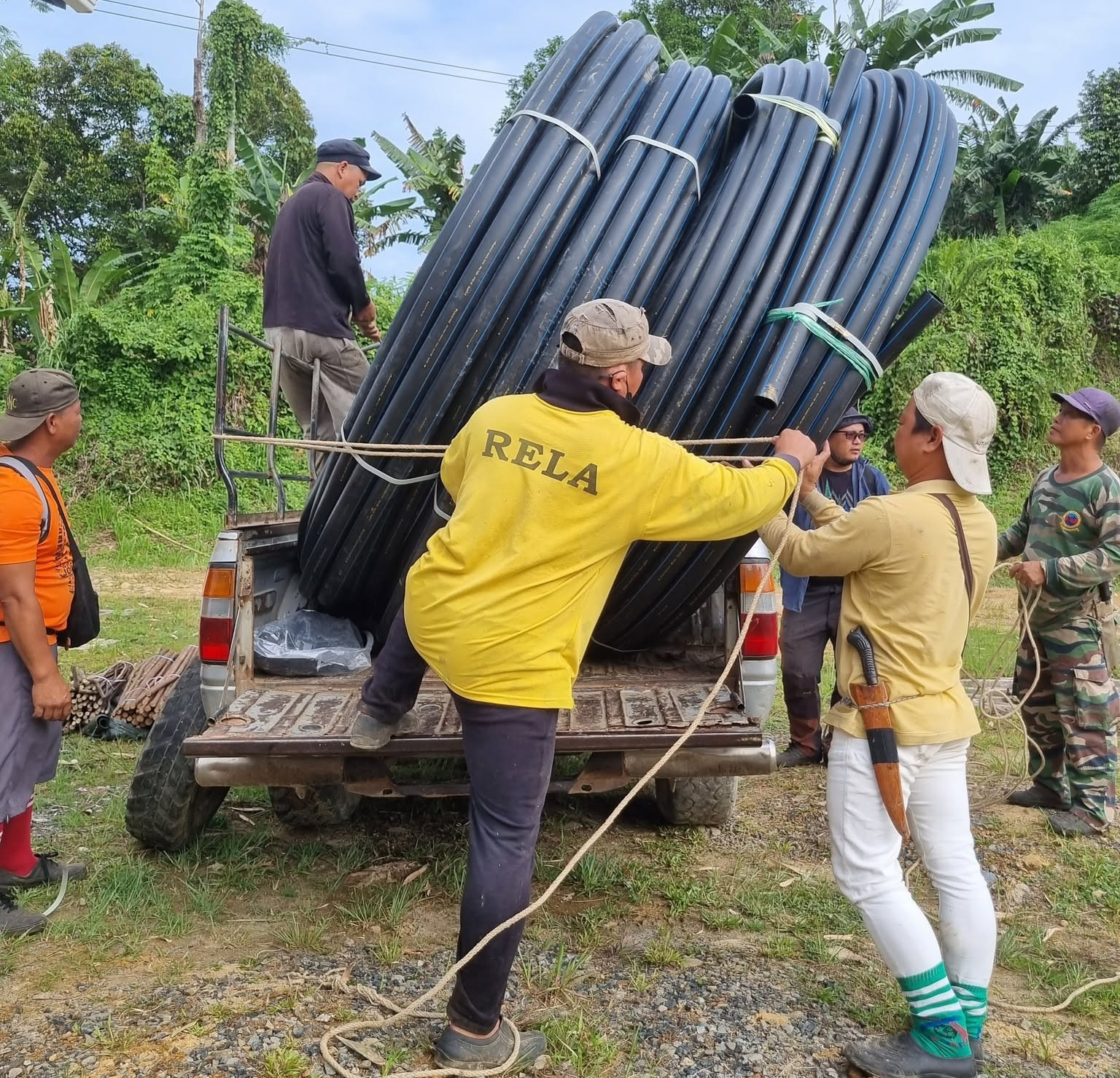
Implementation is usually the part everyone sees.
The pipes are installed. Vegetables are planted. A bridge is repaired. Employees volunteer. Communities participate. Photographs capture the moment. These moments matter.
But behind one programme day may be weeks or months of work that very few people see.
Our team may already have conducted assessments, interviewed households, collected data, walked the proposed route, taken measurements, checked technical feasibility, coordinated with village leaders, sourced materials, managed vendors and prepared communities before implementation even begins.
During implementation, someone needs to be present to coordinate the moving parts and respond when reality does not go exactly according to plan.
And after the programme is completed, the work continues. We return to the field to monitor progress, verify what was delivered, collect data and visual evidence, speak with beneficiaries and understand whether the intended change is actually happening.
A completed activity tells us what was done. Follow-up helps us understand what changed.
This is why we gradually stopped seeing social impact as a one-day event. It is a process that needs people, knowledge and continuity from assessment to impact.
04 — We Started Measuring Change, Not Only Delivery
Over time, our definition of impact changed too. Installing a rural water system is an important output. But what matters afterwards is whether families experience more reliable access to water.

Conducting farming workshops and providing inputs are activities. The longer-term value is whether participating households continue producing food, strengthen their farming knowledge or reduce part of their household food expenses.
Repairing a bridge is a completed project. Its impact is reflected in whether the people who depend on it have safer and more reliable access.
This pushed us to look beyond activities and outputs towards outcomes. It also changed what our teams needed to do.
We began putting greater emphasis on baseline information, household data, measurements, monitoring, beneficiary feedback, visual evidence and follow-up.
Because if we want to say that something created impact, we should also be able to show why we believe it did. And that evidence has value beyond the community itself.
05 — Organisations Need to Understand the Impact Too
Every social commitment has people behind it on the organisation’s side as well.
A company may invest funding, employee time and internal resources into a CSR programme. Management wants visibility. Employees want to know what their participation achieved. Sustainability teams may need data. Corporate Affairs and Marketing teams may need credible stories and evidence to communicate the outcome responsibly.

But gathering that information from a remote community can be difficult. That is another part of the work we have learned to do.
Our team collects relevant field data, measurements, beneficiary feedback, photographs and evidence, then translates what happens on the ground into impact findings and reporting that organisations can understand and use.
Our clients should not need to personally manage every village conversation, vendor, technical issue, field visit or follow-up.
We manage the ground while keeping the organisation informed. This reduces the coordination burden and communication challenges of managing community programmes remotely, while giving organisations clearer visibility into what was delivered, what changed and what their social commitment helped make possible.
And as we became better at doing this, another question emerged: Who sustains the people doing all of this work?
06 — Sustainable Impact Needs Sustainable People Behind It
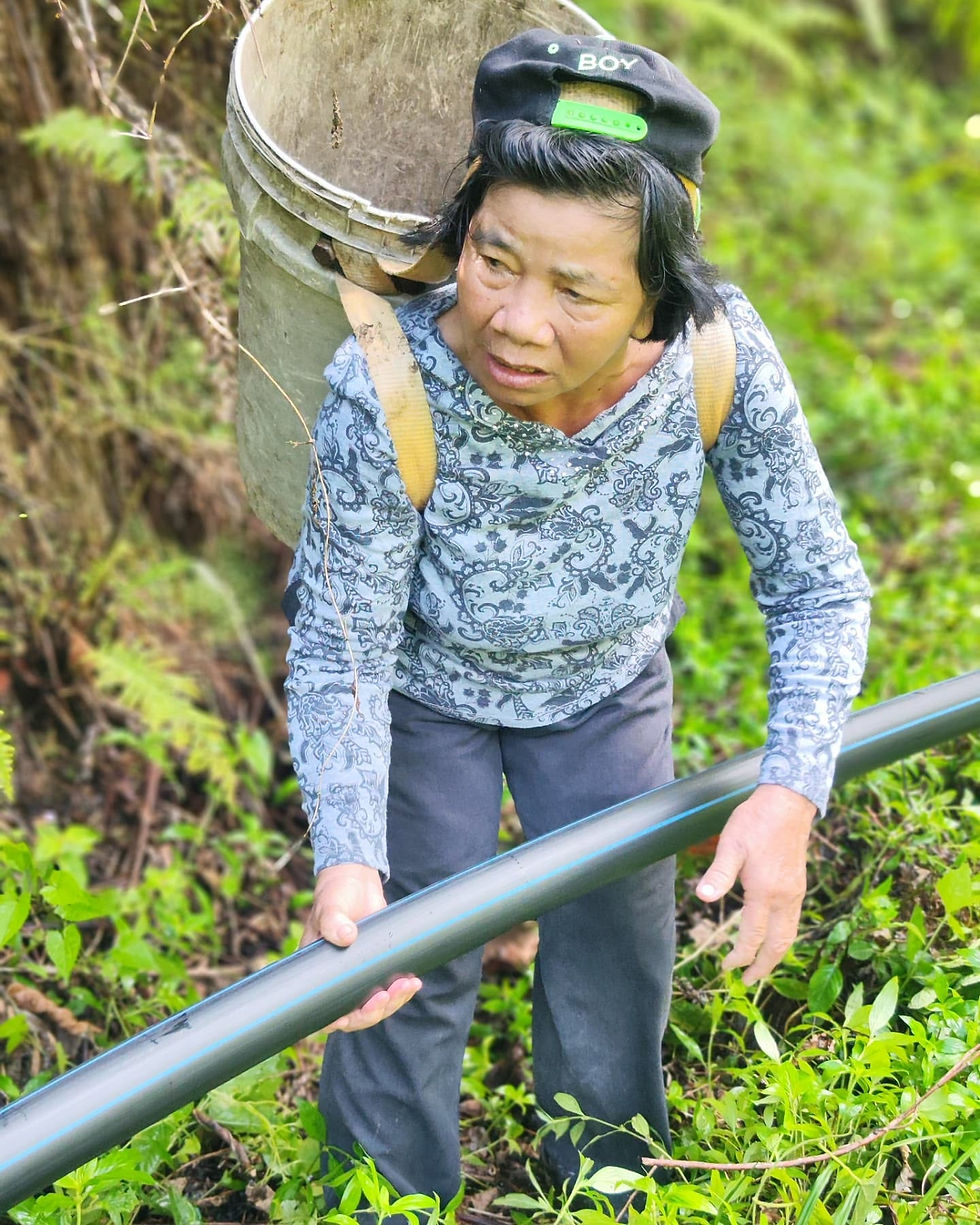
Community development requires people.
Someone has to walk into the field.
Someone has to speak with the families.
Someone has to collect the data.
Someone has to understand the technical challenge.
Someone has to coordinate implementation.
Someone has to return months later.
And someone has to sit down afterwards and turn all of that information into something meaningful.
This work requires a growing mix of community development, technical knowledge, project management, data collection, sustainability, monitoring, photography, communications and impact reporting.
If we want the quality of social impact to improve, the people doing this work need opportunities to improve too.
They need training.
They need experience.
They need career opportunities.
And they need a sustainable livelihood.
Over the years, we have already seen people connected to the communities we once supported develop their skills and later work alongside us as community technicians, field personnel, photographers and local partners.
We want to continue developing that talent.
We also want to attract more people from different professional backgrounds into the social impact sector — bringing new knowledge and capabilities that can strengthen the way community programmes are designed, delivered and measured.
Because the stronger the people behind the work become, the more communities and organisations we can support well. This became one of the biggest reasons we needed a different model.
07 — That Is Why We Evolved Into a Social Business
RuralKita is not simply a new name, logo or commercial version of what we were doing before.
It represents our attempt to build a healthier and more sustainable social impact ecosystem.For us, a social business should create value for different parties while remaining accountable to its social purpose.

For communities - we work to understand real challenges and turn them into practical programmes that can create meaningful improvement.
For organisations - we help turn CSR, ESG and other social commitments into structured programmes — from assessment and programme design to implementation, monitoring, evidence and impact communication.
For our people - the revenue generated from delivering this work allows us to sustain a professional team, develop local talent, strengthen our capabilities and continue doing the fieldwork required to serve both communities and organisations with integrity.
The relationship is connected.
Organisations invest in meaningful social impact. Our team provides the expertise and field capacity to deliver it. Communities benefit from programmes designed around real needs. And the revenue from that work helps sustain and strengthen the people needed to create the next impact.
Impact sustains the people behind the work, and those people make more impact possible.
That is what RuralKita’s social business model means to us. But building a healthier ecosystem also means recognising that we do not have all the answers ourselves.
08 — We Want to Collaborate, Not Duplicate
Our deepest experience has been built through rural community work. But social needs are much wider than rural development.

There are NGOs and social organisations working with children, education, health, disability, urban poverty, environmental issues and many other underserved groups — often with years of specialised knowledge and trusted community relationships.
We do not need to recreate what others already do well.
We would rather collaborate, learn and combine strengths.
Another NGO may understand a particular community or social issue far better than we do. RuralKita may be able to complement that knowledge through programme management, corporate engagement, field assessment, technical capabilities, data collection, monitoring or impact reporting.
Working together also expands our own understanding and allows our resources to become useful beyond the communities and programme areas we currently know best.
For us, collaboration is part of building a healthier social impact sector — where NGOs, social businesses, companies, professionals, local vendors and communities can contribute what each does best.
The goal is not for RuralKita to do everything. The goal is for more good work to become possible and measurable.
09 — RuralKita Is an Evolution, Not a New Beginning

RuralKita did not start with a new identity.
It started with everything the previous decade taught us.
The kilometres travelled.
The forests and muddy trails.
The conversations with families.
The surveys, GPS mapping and measurements.
The projects that succeeded.
The challenges and mistakes that forced us to improve.
The people we trained.
The organisations we worked with.
And the growing understanding that meaningful social impact requires much more than a contribution and a programme day.
Our experience through Hopes Malaysia remains part of that foundation.
Hopes Malaysia continues its role as an NGO, particularly where charitable and immediate community support is appropriate.
RuralKita represents our next stage — a Sabah-based social business connecting organisations, communities, people and partners to create more structured and measurable social impact.
We carry the same years of field experience forward, but with a broader approach:
Assessment → Planning & Design → Implementation → Monitoring → Verification → Impact Reporting → Follow-up
The identity evolved because the work evolved.And so did our understanding of what sustainable impact really means.
10 — What We Hope to Build Next
RuralKita is still evolving. We do not expect to solve every social challenge, nor do we believe we should try to do it alone.
What we hope to build is an ecosystem where different parties can grow by creating value for one another. Where communities receive solutions based on real needs rather than assumptions.
Where organisations can turn their CSR, ESG and social commitments into practical programmes, understand what changed and confidently communicate the results to their stakeholders.
Where NGOs and social organisations can collaborate, share expertise and extend the collective resources available to different underserved groups.
And where our team, local talent and professionals from different backgrounds can build meaningful careers while strengthening the quality of social impact work.
If we can build that ecosystem well, more people can enter the sector, more local capabilities can grow, more organisations can deliver their social commitments with confidence, and more underserved communities can benefit from responsible development.
For us, that is sustainability too.
Not simply keeping one project alive. But building the people, knowledge, partnerships and resources that allow impact to continue.
CSR is more than what you give — it’s what changes after.
RuralKita is our next chapter in helping make that change practical, measurable, communicable and sustainable — for communities, organisations and the people who make the work possible.
That is why we evolved into RuralKita.

Comments