


Your Organisation’s Social Investment Deserves More Than Just a Charitable Handout
We work on the ground to understand rural challenges, using field data and analysis to turn your organisation’s social commitments into practical programmes. We also create meaningful rural volunteer experiences, backed by credible evidence and impact stories that strengthen stakeholder engagement and brand value.
Our streamlined, end-to-end approach reduces complexity and risk, giving your organisation clear visibility and confidence throughout the programme journey.

OUR APPROACH
Sustainable and Measurable Social Impact Doesn’t Happen by Chance. Here’s How We Build It With You.
Six structured steps — from understanding real rural needs to designing, delivering, measuring, reporting and sustaining impact
Conduct site assessments, stakeholder consultations, baseline data collection and technical field verification to understand existing conditions, community priorities and rural challenges.
We analyse the findings to identify gaps, risks, implementation constraints and opportunities before recommending appropriate interventions.Translate assessment findings into a programme strategy, scope of work, budget, implementation plan, measurable targets and technical requirements.
Solutions are designed around actual field conditions while aligning community needs with your organisation’s objectives, available resources and intended outcomes.Manage community engagement, vendors, procurement, materials, rural logistics, technical teams and on-the-ground implementation against the agreed scope, timeline and budget.
Where relevant, we also design and coordinate meaningful corporate and group volunteer experiences as part of programme delivery.Track and verify programme progress and results through quantitative and qualitative data, technical records, field observations, beneficiary feedback and before-and-after evidence.
Delivery is assessed against defined targets to establish what was completed, who benefited and what changed.Consolidate programme data, financial and procurement records, field documentation, photographs, videos, beneficiary stories and measurable outcomes into transparent, client-ready reporting—providing credible evidence for management, boards and stakeholders while supporting impact communication and brand engagement.
Continue beyond programme completion through post-implementation monitoring, field verification and community follow-up to assess functionality, progress and sustainability.
Outstanding issues are identified, corrective actions coordinated where required, and longer-term outcomes documented to support lasting impact.
What Our Approach Looks Like on the Ground
The 6 steps above go far beyond planning on paper. Behind every programme is work that often goes unseen — engaging with communities, conducting field assessments, collecting and analysing data, trekking through challenging terrain, carrying out technical checks, coordinating stakeholders, facilitating workshops and training, implementing solutions, documenting progress and returning to the field for follow-up.


WHY THESE PROGRAMMES
10+ Years on the Ground Shaped Where We Focus Our Impact
Our structured approach is built on more than 10 years of working alongside rural communities — assessing needs, designing solutions, implementing programmes, measuring results and following up on what happens afterwards.
Through this process, we have repeatedly encountered challenges around water access, rising food and living costs, rural infrastructure and geographical isolation.
We have also seen how these needs are interconnected. Reliable water can support farming. Farming can reduce household expenses. Safer infrastructure can improve access to farms, schools and communities. Meaningful volunteering can bring people, skills and experiences into that journey.
These recurring needs and lessons from the ground have shaped the five programme areas we focus on today.
.jpg)
01 — RURAL GRAVITY-FED WATER PROGRAMME
Improving Reliable Access to Natural Water for Everyday Rural Life
For many remote communities, water is not simply a utility — it shapes everyday life.
When treated piped water cannot reach a village, families may depend on ageing gravity-fed systems, seasonal water sources, or travel to streams and other sources to meet their daily needs. Difficult terrain, population growth and changing weather conditions can make that access even more challenging.
Our work starts by understanding the actual conditions on the ground. Through field assessments, community input, GPS and elevation mapping, water-flow data, and terrain and route analysis, we turn what we learn into practical gravity-fed water solutions designed around each community’s needs and environment.
Because reliable water creates impact far beyond the pipeline itself. It can reduce the time, effort and household cost of accessing water, support everyday needs, and create a stronger foundation for farming, food production and other livelihood opportunities.
We don’t just look at where water needs to go. We look at how a system can continue serving the community over time.
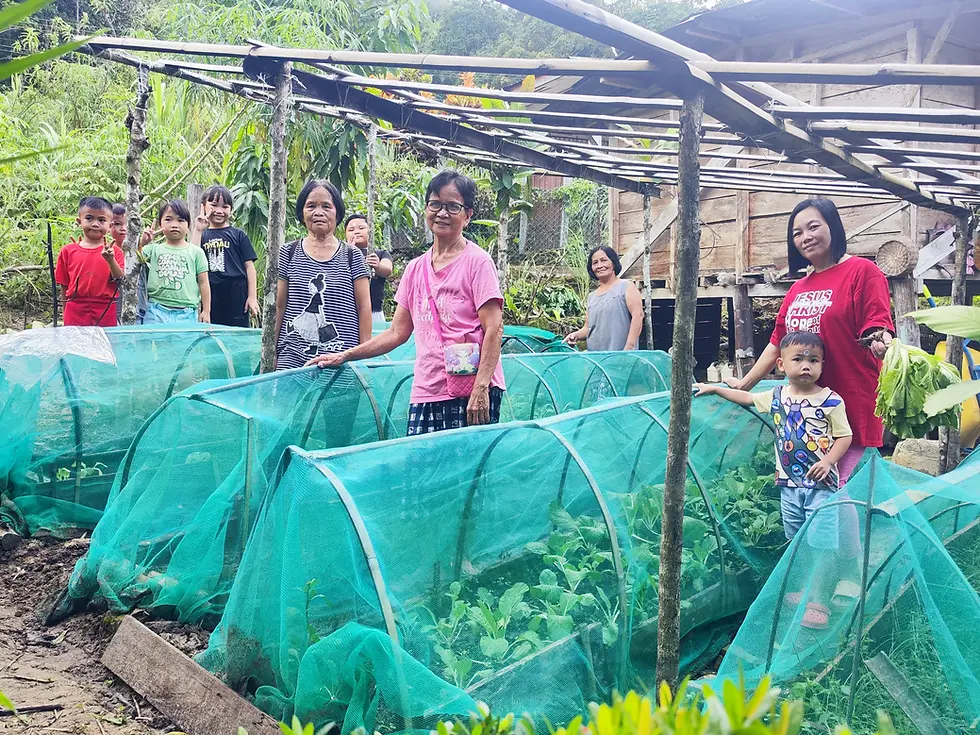
02 — HOUSEHOLD FARMING & FOOD SECURITY PROGRAMME
Building Farming Skills to Reduce Rural Living Costs
Once reliable water access is established, the next question is — how can this natural resource create more value for rural families?
In underserved rural areas, limited job opportunities and reliance on irregular daily wages can make household income less predictable. Rising living costs, distant markets, costly fuel and limited transport add further pressure to everyday food expenses.
Many families already have access to land and natural water resources, but may have limited exposure to the farming knowledge, practical skills and techniques needed to use these resources effectively.
Our approach goes beyond providing farming materials. We begin with household baseline assessments and farm mapping, followed by crop planning and planting schedules based on available space, water access and local conditions. Through structured workshops, hands-on training, farming inputs and progress monitoring, families learn by doing while we measure participation, application and progress over time.
The goal is to make better use of resources already available — growing food closer to home, reducing household expenses, strengthening food security and building practical skills for long-term self-reliance.

03 — RURAL INFRASTRUCTURE DEVELOPMENT & REPAIR
Building Safer Connections for Everyday Rural Life
In remote communities, suspension bridges can be essential daily connections to homes, farms and schools. When they deteriorate, everyday journeys can become serious safety risks — particularly across rivers and difficult terrain. Decaying timber planks, weakened connections, ageing wire ropes and damaged structural components can make access increasingly unsafe, especially where alternative routes are limited.
Through on-site assessments, measurements, condition checks and material planning, we identify what needs to be repaired, replaced or strengthened. Where appropriate, we explore more durable solutions — such as steel purlins and repurposed tyres — to reduce reliance on materials that deteriorate quickly under rural conditions.
Through our Volunteer Programme, corporate and group volunteers can take part in selected building activities — contributing manpower while gaining hands-on experience, cultural exchange and meaningful engagement with rural communities.
The goal is safer, more reliable rural access, while creating infrastructure that communities can continue to use and maintain over time.

04 — CORPORATE & GROUP FARMING EXPERIENCE PROGRAMME
Experience Rural Life. Learn by Doing. Contribute Together.
Our farming experience brings participants into rural communities to learn, work and engage alongside local families — turning corporate volunteering into a practical and meaningful experience.
Participants get hands-on with farming tools, crops, planting preparation and practical growing techniques, while learning how local resources are used to support household food production.
We coordinate the programme design, community engagement, materials, on-ground facilitation and photography, with meals prepared by the local community adding another layer of cultural exchange and local participation.
The result is a hands-on rural experience combining teamwork, practical learning, cultural exchange and meaningful contribution — while giving participants a closer understanding of rural life and food production.

05 — RURAL SABAH EXPEDITION PROGRAMME
Go Beyond Volunteering. Live the Rural Experience.
Our Rural Sabah Expedition takes participants beyond a typical volunteer programme and into the landscapes, culture and everyday life of rural Sabah.
Over several days, participants stay in local homestays, engage directly with communities, take part in volunteer activities, experience local culture, and explore Sabah’s rural environment through outdoor and adventure activities.
We coordinate the expedition planning, community engagement, accommodation, transport, meals, activities and on-ground facilitation, while involving local communities as hosts, guides, food providers and activity partners — creating opportunities for local participation and additional income.
Whether you’re a club, school, university, corporate team or group of friends, we welcome groups looking for a more meaningful way to experience rural Sabah.
The result is an immersive journey combining volunteering, adventure, cultural exchange and genuine community connection — creating memorable experiences for participants while bringing engagement and economic opportunities directly to rural communities.
Do Our Approach and Programmes Align with Your Organisation’s Goals?
Every organisation has different objectives, priorities, budgets and timelines. Whether you’re planning a CSR programme, corporate volunteering initiative, sustainability project, employee engagement activity or community partnership in Sabah, let’s explore where our approach can support what you want to achieve.
Share your objectives, budget range and preferred timeline — and we’ll explore what we can build together based on your priorities and community needs.


